
Last updated September 10, 2026
Full 25-point door and opener safety check with every visit - springs, cables, rollers, tracks, and your LiftMaster or Chamberlain opener included
You get a price before we start. It does not change when the truck arrives.
 Before
 After
After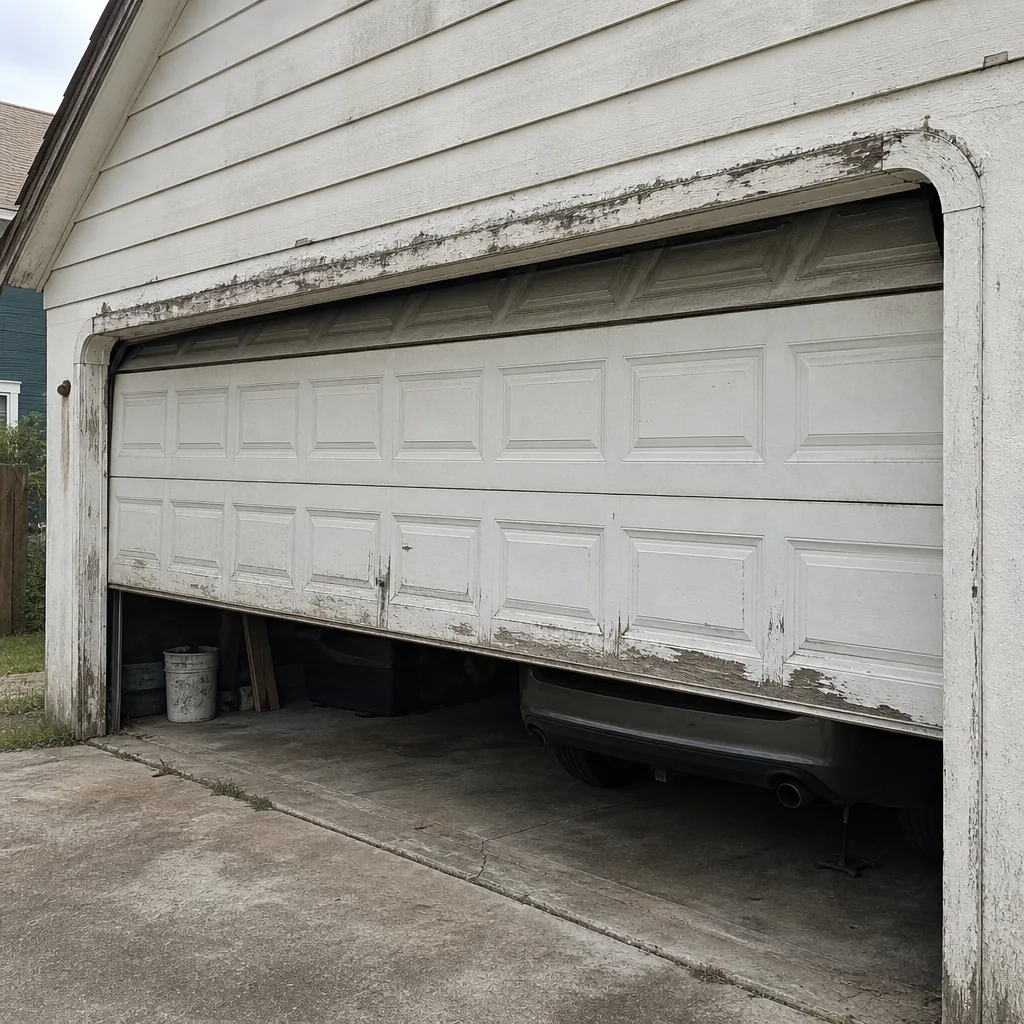 Before
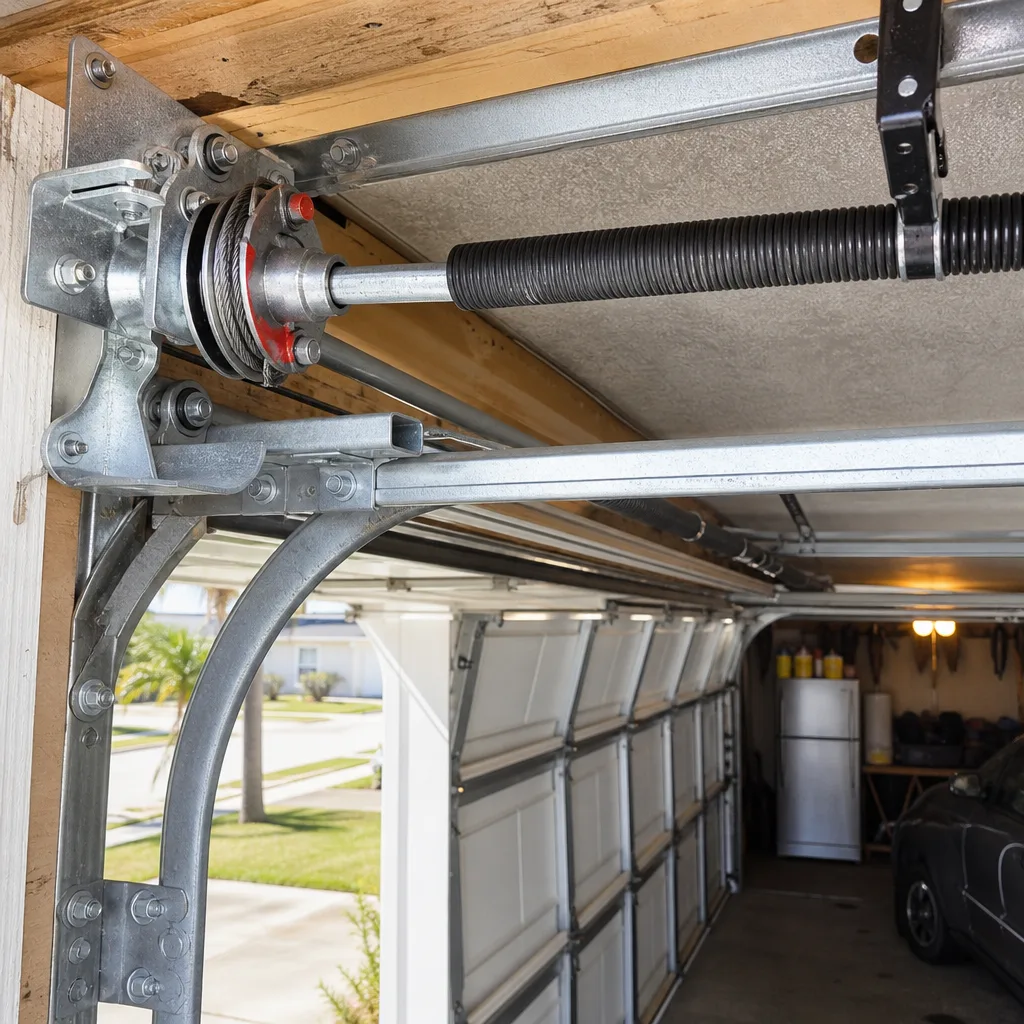 After
After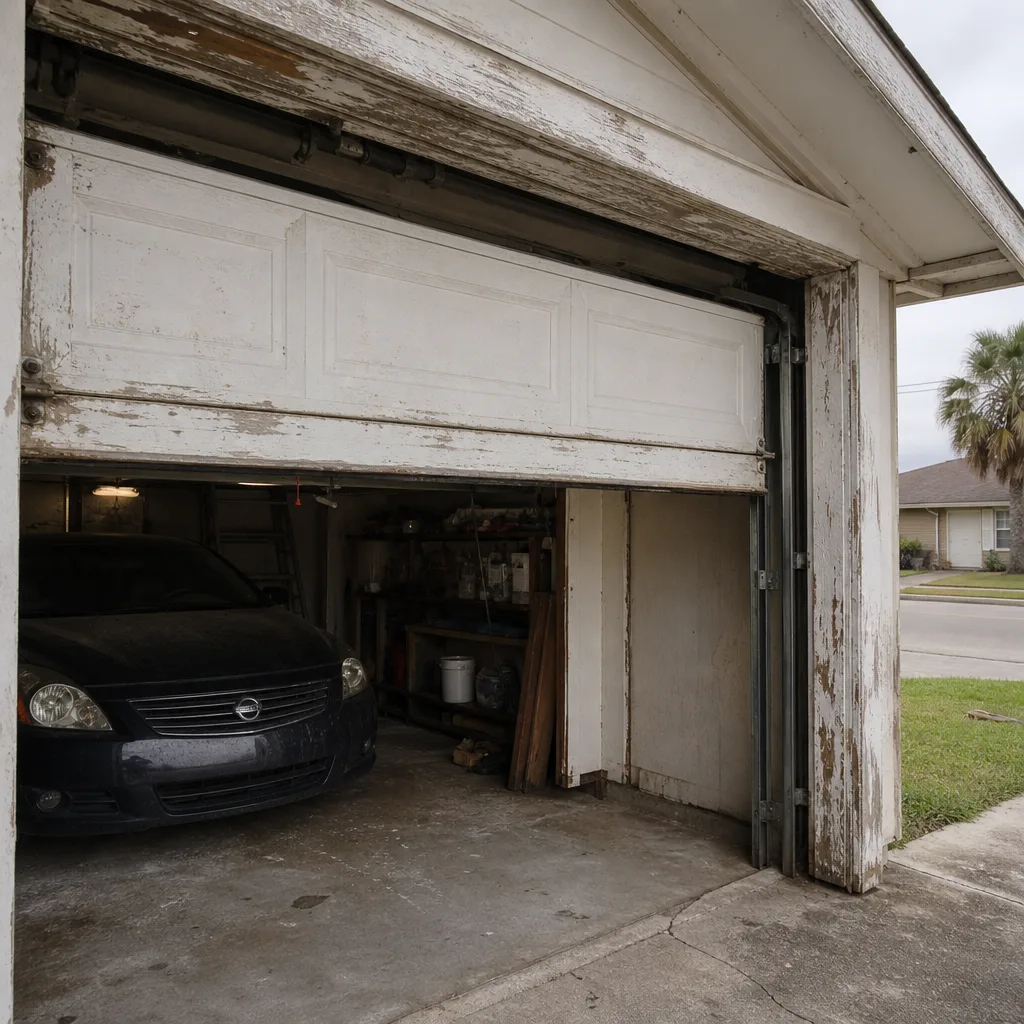 Before
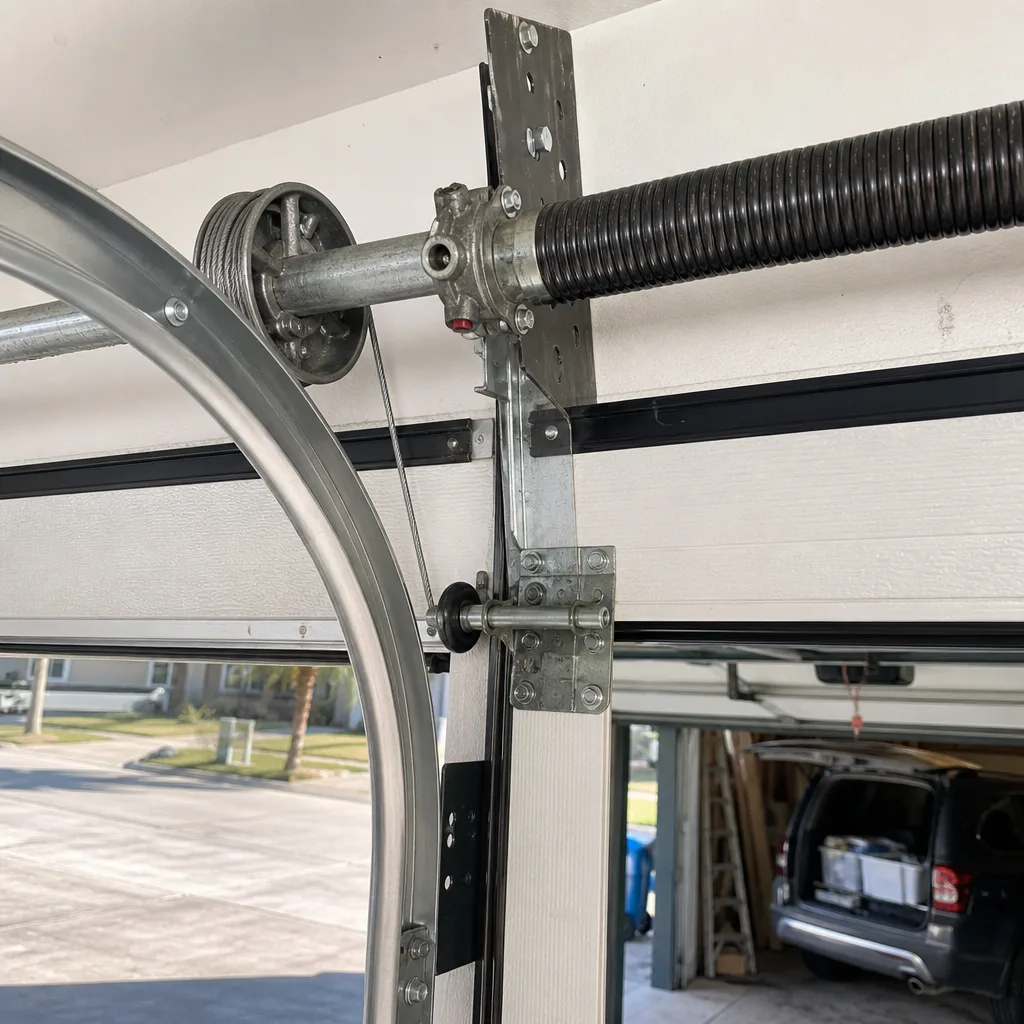 After
AfterGarage Door Repair Maintenance Checklist for Galveston Homeowners
The single maintenance step Galveston homeowners skip most often is also the one that determines whether a torsion spring lasts four years or nine. We’re talking about lubricating that spring with a non-salt-attracting grease, done twice yearly, right after the humidity spikes in May and again after hurricane season. In our 42 years serving the Texas coast, we’ve replaced thousands of springs that failed early because salt-laden air drew moisture to a standard lubricant, turning it into a gritty paste that ground the coils apart. This guide gives you an event-based checklist built around Galveston’s actual climate triggers, not arbitrary calendar months.
Quick Answer
A proper garage door maintenance checklist for Galveston homeowners includes quarterly visual inspections, twice-yearly lubrication with salt-resistant products timed to humidity peaks, pre-hurricane-season hardware torque checks, and scheduled replacement of three coastal-vulnerable components: bottom seal, rollers, and spring cable. Most homeowners can handle the visual and testing items safely. Anything involving spring tension, cable windings, or opener electrical work should be left to a trained technician, like those who provide our Garage Door Repair services.
Table of Contents
- Why Galveston’s Climate Changes the Maintenance Schedule
- Pre-Hurricane-Season Inspection Checklist
- The Galveston Lubrication Map: What Gets Grease, What Doesn’t
- Post-Tropical-Weather Damage Checklist
- Testing Auto-Reverse and Photo-Eye Sensors in Humid Conditions
- The Three Components to Replace on Schedule, Not on Failure
- Monthly and Quarterly Checks You Can Do Yourself
- Common Mistakes to Avoid
- When to Call a Professional
- Frequently Asked Questions
Why Galveston’s Climate Changes the Maintenance Schedule
Standard garage door maintenance checklists assume a dry, temperate climate. Galveston is neither. We’re on a barrier island with average relative humidity above 75% eight months of the year, salt spray carried inland by southeast winds, and a hurricane season that runs June through November with tropical storms that can park overhead for days.
These conditions create a specific failure sequence we’ve watched repeat across Island, Jamaica Beach, and the West End for four decades:
- Salt attracts moisture to metal surfaces, accelerating corrosion on springs, cables, and bottom brackets.
- Humidity swells wooden door sections (common on historic Galveston homes), throwing off balance and straining openers.
- Wind-driven rain forces water past degraded seals, rusting track bottoms and corroding roller stems.
- UV exposure degrades rubber components faster than inland Texas, since reflected light off the Gulf intensifies the effect.
This is why we organize maintenance around events, not months. The calendar doesn’t matter. What matters is what the air and water are doing to your door.
Homes in the historic districts near the Strand, with original carriage-style doors or early raised-panel designs, face an additional challenge. Many of these doors were built before modern weatherstripping and lack the thermal breaks that prevent condensation inside the sections. We’ve seen Clopay and Amarr replacement doors outlast original wood units by 15 years in these conditions, but even steel doors need adjusted care here.
The humidity also affects your opener. Circuit boards in overhead units collect condensation during rapid temperature swings, common when a summer storm front drops the temperature twenty degrees in an hour. Genie and LiftMaster both design coastal-rated components, but standard residential openers in Galveston benefit from more frequent inspection of the logic board housing for corrosion at connection points.
Pre-Hurricane-Season Inspection Checklist
Every May, before the named storms start forming, we recommend a focused inspection that goes well beyond the standard “look for wear” advice or generic Garage Door Warning Signs: A Galveston Homeowner’s Reference Guide type checklists. These are the items that determine whether your door survives a close pass or fails under pressure.
1. Manual Disconnect Test
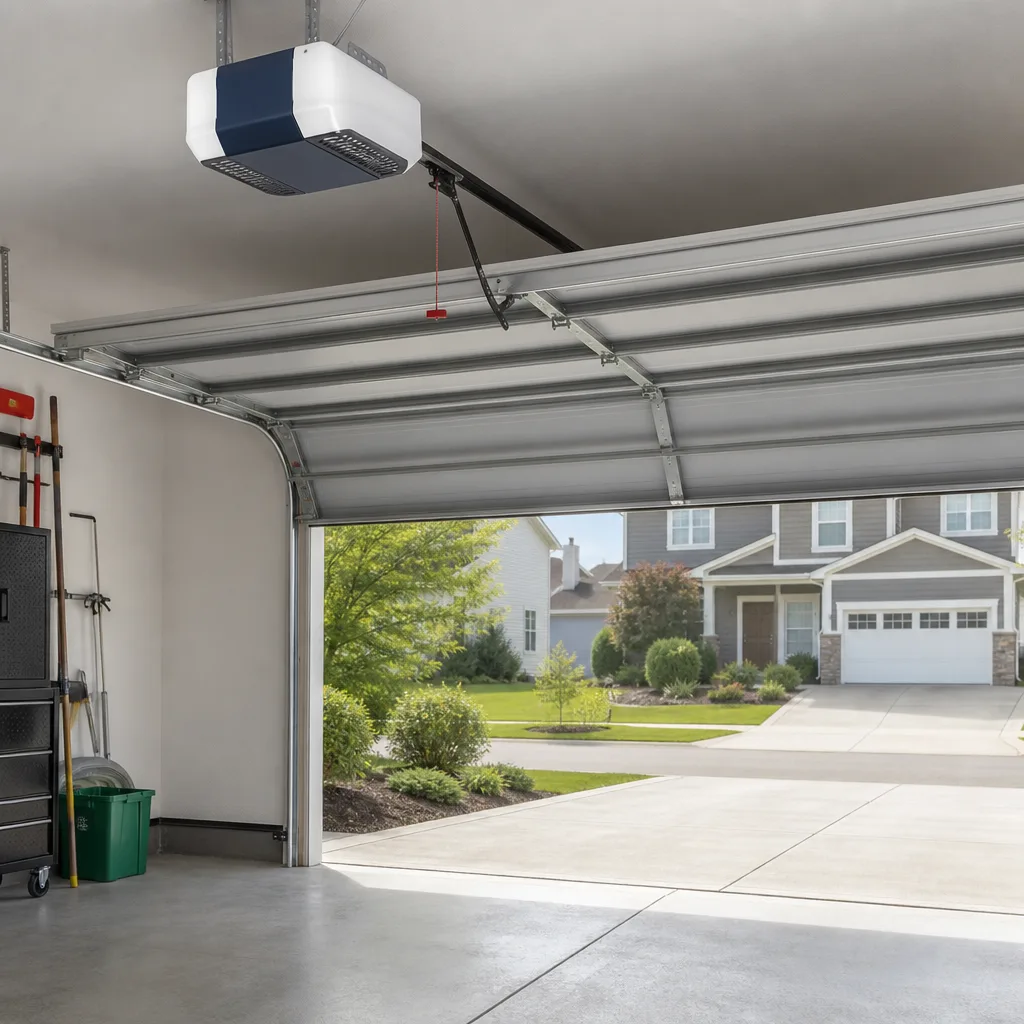
Pull the red emergency release handle with the door closed. It should move freely and allow you to lift the door by hand. If it sticks or requires force, the mechanism is corroding, and you may not be able to get your car out if power fails during a storm. After testing, re-engage the trolley and run the opener through one complete cycle to confirm proper reconnection.
2. Battery Backup Cycle
If your opener has battery backup (required on new installations in many Texas jurisdictions), disconnect power at the outlet and operate the door twice on battery alone. The battery should deliver at least 24 hours of standby power and complete 20 open/close cycles when new. After three Galveston summers, we’ve found most batteries test at 40-60% of rated capacity. Replace before June if testing shows weakness.
3. Wind Brace Hardware Torque
Doors rated for high wind zones have horizontal or vertical reinforcement struts bolted to the interior face. Check that all bolts are present and tight. In the 2008 hurricane season, we saw multiple doors in Pirates Beach and Spanish Grant fail not from wind pressure directly, but from brace bolts that had vibrated loose over years of normal operation. Use a socket wrench to verify, not a screwdriver. The correct torque for most 3/8-inch lag bolts into steel struts is 25-30 ft-lbs.
4. Track Mount Fasteners
Inspect where vertical tracks attach to the door jamb. Wood framing in older Galveston homes, especially those raised after the 1900 storm, can soften from decades of humidity cycling. If lag screws spin freely or the track pulls away from the jamb even slightly, the mounting surface has degraded. This is not a homeowner repair; for help finding qualified help, see How to Hire a Garage Door Contractor in Galveston: A Step-by-Step Guide.
5. Bottom Seal Condition
The threshold seal is your door’s first defense against wind-driven water. Look for cracking, flattening, or gaps where light shows through with the door closed. A proper seal should compress to roughly half its original height when the door is down. If it’s hard or shiny from UV exposure, replace it. We stock EPDM rubber seals rated for salt-air environments, which outlast standard vinyl by 3-4 years in Galveston conditions.
6. Operator Reinforcement Bracket
The bracket that connects your opener arm to the top section of the door takes enormous stress during high winds that try to bow the door outward. Check for cracks in the bracket, elongated bolt holes, or any deformation of the top door section around the bracket footprint. Wayne Dalton and Clopay doors use different bracket geometries; know which you have, and don’t substitute generic hardware.
The Galveston Lubrication Map: What Gets Grease, What Doesn’t
Most maintenance guides say “lubricate moving parts” and leave it at that. In Galveston, the wrong lubricant in the wrong place causes more damage than no lubrication at all. Salt air turns petroleum-based greases into abrasive pastes and washes dry lubricants off exposed surfaces faster than inland climates.
Here’s what we’ve learned from maintaining doors from East Beach to San Luis Pass:
Use White Lithium Grease (Salt-Resistant Formula)
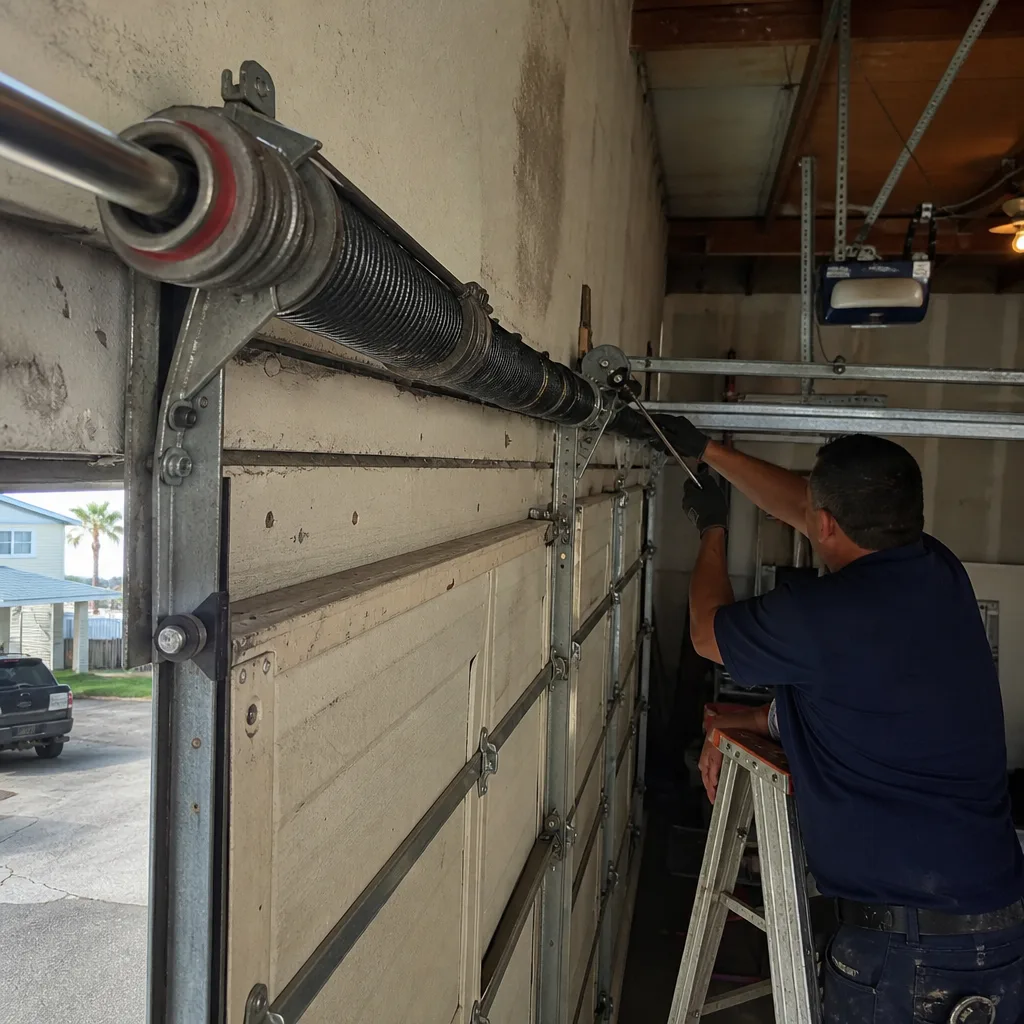
- Torsion spring: Full length of coils, wiped to thin film. This is the critical one. We use Lubriplate or equivalent white lithium with corrosion inhibitors, never standard WD-40 (which evaporates and leaves a residue that attracts salt).
- Spring anchor bracket and bearing plates: The stationary fittings at each end of the torsion tube. Work grease into the bearing surface where the tube rotates.
- Roller stems inside roller brackets: The pivot point where the roller connects to the door section. Not the roller wheel itself.
- Hinges: Pin and barrel only. Wipe excess; accumulated grease catches sand and salt.
- Lock mechanism (if present): Latch and cam surfaces. Most Galveston homeowners don’t use their door locks, but the mechanism corrodes in place if neglected.
Use Dry Silicone or Teflon-Based Lubricant
- Roller wheels and track interior: The rolling surface needs low friction without stickiness. Dry lube won’t attract grit. Apply sparingly; excess runs down and pools on the floor.
- Weatherstripping contact surfaces: Where the door face meets the jamb seals. Prevents rubber from sticking and tearing in humid conditions.
- Lock keyway: Graphite or dry Teflon spray. Never oil, which gums up in salt air.
Never Lubricate
- Track interior with grease: The roller wheels need to roll, not slide. Grease in the track collects abrasive debris and accelerates roller wear.
- Opener rail (screw or chain drive): Factory-lubricated and sealed. Adding lubricant attracts dust and can void warranty on Genie screw-drive units.
- Photo-eye lenses: Clean with dry cloth only. Any film on the lens causes false triggers in humid dawn/dusk conditions common on the Island.
- Brake surfaces or clutch mechanisms: On opener systems with mechanical safety brakes, lubrication compromises function.
Timing matters as much as product. We lubricate in mid-May, after the first humidity spike but before hurricane season stress, and again in mid-October, after the peak storm period but before the winter northerns bring dry, dusty air that can embed in wet lubricant.
Post-Tropical-Weather Damage Checklist
After any tropical storm or hurricane pass within 100 miles of Galveston, your door has experienced loading it wasn’t designed for daily. Even if it appears to operate normally, inspect these specific items before the next weather event compounds hidden damage.
Bottom Seal and Threshold
Wind-driven rain scours the bottom seal and can force water past a compromised threshold into the track bottom. Look for:
- Sand or debris packed into the seal extrusion
- Water staining on the interior floor directly under the door center
- Seal pulled loose from retainer at either end (wind vortex effect at door corners)
In the 2019 tropical storm season, we replaced forty-seven bottom seals in the Kempner Park area alone, mostly because homeowners didn’t realize wind had partially extracted the seal from its retainer channel.
Cable Drums and Cable Condition
Cable drums are the grooved wheels at each end of the torsion tube that wind and unwind the lift cables. Storm winds that try to force the door upward or bow it outward put abnormal load on these components.
Inspect with the door closed. The cable should seat cleanly in the drum grooves with no overlapping, no fraying, and no rust “weeping” from inside the strands. If you see any of these, the cable has been overloaded and is living on borrowed time. Cable replacement requires releasing spring tension; this is not a homeowner procedure.
Track Alignment and Fastener Security
Run the door through a complete cycle and watch the rollers in the vertical track. They should roll smoothly without binding or popping. If the door seems to “climb” one side or the horizontal track visibly flexes, wind loading may have shifted the track mounting. Check that all jamb brackets and back-hang supports are secure.
Opener Force Settings
Storm debris or wind pressure can subtly bend door sections or track, increasing operating resistance. Test the opener’s force sensitivity: with the door mid-travel, apply light hand pressure against the direction of travel. The opener should reverse. If it struggles or continues against resistance, the force setting is too high for current conditions, masking a mechanical problem that will worsen.
Weatherstripping on Jamb and Header
Inspect the flexible seals where the door meets the frame. Wind-driven rain can penetrate behind loose stripping, leading to hidden rot in wood jambs or corrosion in steel ones. The header seal (across the top of the door opening) is especially vulnerable; it’s often installed with insufficient fasteners and can be partially torn away without obvious visual damage from the ground.
Testing Auto-Reverse and Photo-Eye Sensors in Humid Conditions
The automatic reverse feature and photo-eye safety sensors are your door’s most important protective systems. In Galveston’s humidity, they fail in specific ways that inland checklists don’t address.
Mechanical Auto-Reverse (Downward Force Test)
Place a 2×4 board flat on the floor centered under the door path. Close the door using the remote. It should reverse within 2 seconds of contacting the board. If it doesn’t reverse, or if it reverses only after significant force, the close-force setting needs adjustment.
Humid air causes subtle swelling in wooden door sections, increasing friction in the tracks. We’ve seen properly adjusted openers fail this test six months later simply because summer humidity expanded the door. Test quarterly in Galveston, not annually.
Photo-Eye Sensor Test
The photo-eyes transmit an invisible beam across the door opening. Interrupting it should stop and reverse a closing door. On humid Galveston mornings, especially in bayfront properties where fog rolls in, we’ve seen two distinct failure modes:
- False trigger: Moisture condenses on the lens or reflector (on reflective-eye systems), scattering the beam and causing the door to reverse immediately or refuse to close. The homeowner overrides with constant wall-button pressure, defeating the safety system.
- Missed obstruction: Condensation on the interior of the lens housing creates a diffuse glow that the sensor interprets as beam reception even when the beam is broken. The door closes on an obstruction.
Test monthly during humid months: close the door and break the beam with your leg at ankle height. The door must reverse immediately. Clean lenses with dry microfiber only. If false triggers persist, the sensor housing may need re-aiming or replacement with a model rated for high-humidity environments.
On properties facing the Gulf, where salt spray is heaviest, we recommend annual replacement of photo-eye lenses even if they appear clear. The salt etches the plastic surface progressively, degrading optical clarity in ways not visible to casual inspection.
The Three Components to Replace on Schedule, Not on Failure
In Galveston’s environment, waiting for visible failure on certain components means waiting too long. The failure mode is often sudden and destructive, damaging adjacent parts. We replace these three on a schedule based on observed lifespan in coastal conditions.
1. Bottom Seal (Every 2-3 Years)
The bottom seal is sacrificial; it’s designed to be the part that wears out first, protecting everything above it. In Galveston, UV degradation and ozone cracking accelerate once the surface hardens, typically 24-36 months after installation. Waiting for visible gaps means wind-driven rain has already been entering, corroding track bottoms and door bottom brackets.
We inspect seals on every service call and recommend replacement at first sign of surface hardening, even if no gaps are visible yet. The $40 part prevents $400 in downstream corrosion repair.
2. Rollers (Every 5-7 Years for Steel, 3-4 for Nylon)
Rollers carry the full weight of the door in the tracks. Their bearings accumulate salt and grit; in humid conditions, the lubricant breaks down and the bearings seize. A seized roller turns into a slider, grinding flat spots that destroy the track and put enormous side-load on the door sections.
Steel rollers with sealed bearings last longest in our experience; open-bearing designs fail faster. Nylon rollers run quieter but the wheels themselves degrade from UV faster than steel. We stock both and recommend based on the door’s exposure. Full sun exposure on a south-facing door? Steel rollers, replaced at 5 years. Shaded carport installation? Nylon is fine, replaced at 3-4 years.
3. Spring Cable (Every 7-9 Years)
The lift cables that run from the bottom brackets to the cable drums are the most dangerous scheduled replacement. They don’t warn you. One frayed strand becomes ten; ten becomes a snap under load. When a cable breaks with the door open, the door crashes down with no restraint.
In Galveston’s salt air, internal corrosion progresses inside the cable strands where you can’t see it. We’ve cut open apparently sound cables and found the interior completely rusted. Our recommendation: replace cables at 7 years on any door facing prevailing southeast winds, 9 years on protected installations. This is conservative; we’ve seen cables fail at 6 years in direct beachfront exposure.
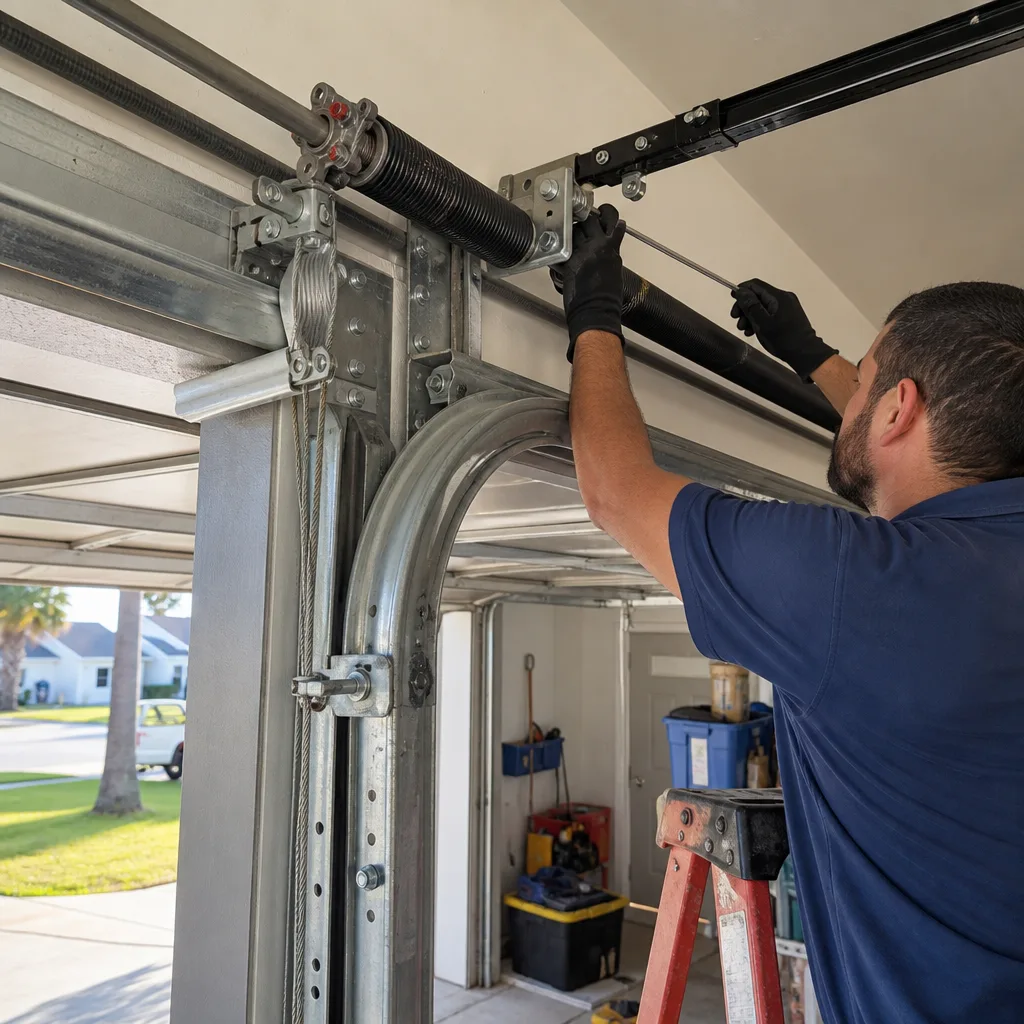
Safety note: Cable replacement requires releasing torsion spring tension, a procedure that has killed experienced technicians. Never attempt this yourself. The stored energy in a wound torsion spring can remove fingers or worse. This is what we train for.
Monthly and Quarterly Checks You Can Do Yourself
Between the event-based deep inspections, these quick checks-and more guides & resources-keep you aware of developing problems. Most take under five minutes.
Monthly (5 Minutes)
- Visual sweep: With door closed, scan springs, cables, rollers, and hinges for visible rust, fraying, or deformation.
- Balance test: Disconnect opener (pull red handle), lift door manually to waist height, release. It should stay in place. If it falls or rises, spring tension is drifting.
- Reversal test: Use remote to close, then break photo-eye beam with foot. Door must reverse.
- Listen: Run one complete cycle. Grinding, popping, or squealing indicates a problem developing.
Quarterly (15 Minutes)
- All monthly items, plus:
- Hardware torque check: With door closed, test tightness of track bolts, roller bracket fasteners, and opener mounting bolts with appropriate wrench. Don’t over-tighten; you’re checking for looseness, not applying maximum force.
- Weatherstripping inspection: Look for tears, compression set (permanent flattening), or detachment from frame.
- Opener rail and chain/belt: Visual inspection for accumulated debris, loose chain tension (1/2-inch sag at midpoint is normal for chain drives), or damaged belt teeth.
- Remote battery test: Weak batteries cause intermittent operation that owners mistake for opener failure. Replace annually as preventive maintenance.
Keep a simple log: date and what you checked. When you call for service, this history helps us diagnose faster and more accurately.
Common Mistakes to Avoid
- Using standard WD-40 as a lubricant. It’s a solvent and water displacer, not a lubricant. The residue attracts salt and grit, accelerating wear. We’ve replaced springs that failed in two years because of this single error.
- Ignoring the door after installing a new opener. A powerful new opener can mask a failing spring or unbalanced door, operating it until catastrophic failure. Always have the door’s mechanical condition assessed when upgrading openers.
- Pressure-washing the door and components. Common after storms, this forces water into bearings, cable strands, and opener housings. If you must clean, use a damp cloth and dry immediately.
- Adjusting spring tension with a winding bar and YouTube confidence. We’ve responded to emergency calls where homeowners attempted this. The injuries are severe and permanent. This is not a skill acquired from video; it’s apprenticed over years.
- Waiting for the door to stop working entirely. Intermittent problems, slow operation, or unusual noise are early warnings. Addressed promptly, they’re minor adjustments. Ignored, they become full replacements.
- Using non-galvanized or non-stainless hardware for repairs. Standard steel fasteners corrode visibly within one Galveston summer. We use only corrosion-resistant hardware; insist on it from any service provider.
When to Call a Professional
Call a trained technician when you encounter spring tension issues, cable wear or detachment, opener electrical problems, track damage or misalignment, or any door that has been struck by a vehicle or fallen object. These situations involve forces or systems that can cause serious injury without proper training and equipment.
We’re also the right call when you want a documented assessment of your door’s condition before hurricane season, or when you’re unsure whether a noise or behavior is normal. Garage Door Repair in Galveston is our daily work, and we know what these doors do in this specific environment.
Mainspring Garage Door Co. offers free estimates in Galveston. Carl Dutton or one of our journeyman technicians will assess your door, explain what we find in plain language, and give you a flat price before any work begins. Call (409) 498-6056.
Frequently Asked Questions
Perform basic visual and balance checks monthly, lubricate twice yearly timed to humidity peaks in May and October, and conduct a full pre-hurricane-season inspection every May. Replace bottom seals every 2-3 years, rollers every 5-7 years, and cables every 7-9 years regardless of visible condition. Call (409) 498-6056 if you’re unsure where your door stands in this cycle.
You can safely handle monthly visual inspections, lubrication of specified points, photo-eye cleaning, and the balance test. Never attempt spring tension adjustment, cable replacement, or opener electrical work. The stored energy in a torsion spring can cause fatal injury. Our technicians are trained under the K.E.Y.S. values code and carry the proper winding bars and safety equipment.
Our seasonal tune-up is $89 and includes full inspection, lubrication with salt-resistant products, hardware torque verification, safety system testing, and a written condition report. Repairs identified during tune-up are quoted upfront with no obligation. We also offer $50 off any repair over $250, and seniors and veterans receive a permanent 5% discount. Call (409) 498-6056 to schedule.
Condensation on photo-eye lenses or reflectors scatters the safety beam, causing false triggers. Clean lenses with dry microfiber only. If the problem persists, the sensor may need re-aiming or replacement with a humidity-rated model. In Galveston’s climate, we see this most often on doors facing the Gulf or in low-lying areas where fog lingers.
Verify that your door’s wind load rating matches current local requirements and that all wind brace hardware is present and tight. A door that meets code on paper can fail if a single strut bolt is missing. After Hurricane Ike, we saw multiple doors in the West End survive the storm itself but fail when a weakened brace let go during the hours of turbulent winds that followed the eye’s passage.
Signs include visible coil gaps (the spring should be tightly wound), rust weeping from between coils, a door that feels heavy during manual lift, or opener strain noises that weren’t present before. In Galveston’s salt air, springs often fail from internal corrosion before visible gaps appear. If your springs are over 7 years old, have them assessed professionally. Spring replacement is our namesake service at Mainspring Garage Door Co. home; it’s what we’ve done since 1984.
The Bottom Line
Galveston garage doors fail in predictable patterns driven by salt, humidity, and storm exposure. The homeowners who avoid emergency repairs are those who match their maintenance to these environmental triggers, not to a generic calendar. Lubricate with the right products at the right times. Inspect before hurricane season with specific attention to wind hardware and battery backup. Replace seals, rollers, and cables on a schedule before they fail catastrophically. And know which tasks are yours, and which belong to a trained professional with the right tools and the standing to stand behind the work.
We’ve maintained, repaired, and replaced garage doors across Galveston Island for 42 years. The principles in this checklist are drawn from what we’ve observed in every neighborhood from the East End to Jamaica Beach. If you’d like a professional assessment of your door’s condition, or if you’ve found something during your own inspection that concerns you, we’re here. No phone trees, no voicemail, no after-hours answering service. A live person answers every call, and we arrive with the parts to finish most jobs in a single visit.
Garage Door Installation in Galveston and Garage Door Opener in Galveston are also available if your inspection reveals it’s time for more than maintenance. Whatever your door needs, we quote the flat price before the wrench comes out, and we stand behind it for 90 days in writing.
Call (409) 498-6056 for a free estimate.
Written by Carl Dutton, Owner at Mainspring Garage Door Co., serving Galveston since 2016.