
Last updated September 10, 2026
Full 25-point door and opener safety check with every visit - springs, cables, rollers, tracks, and your LiftMaster or Chamberlain opener included
You get a price before we start. It does not change when the truck arrives.
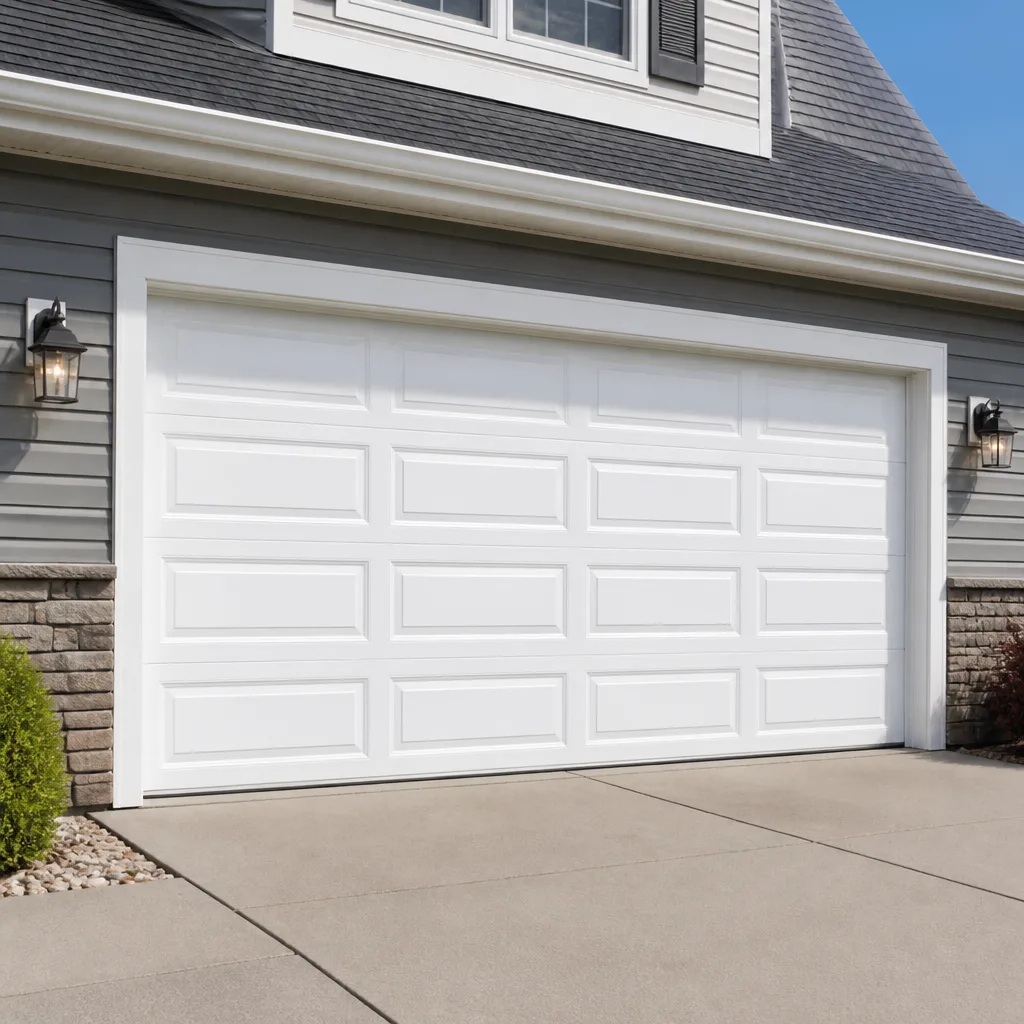
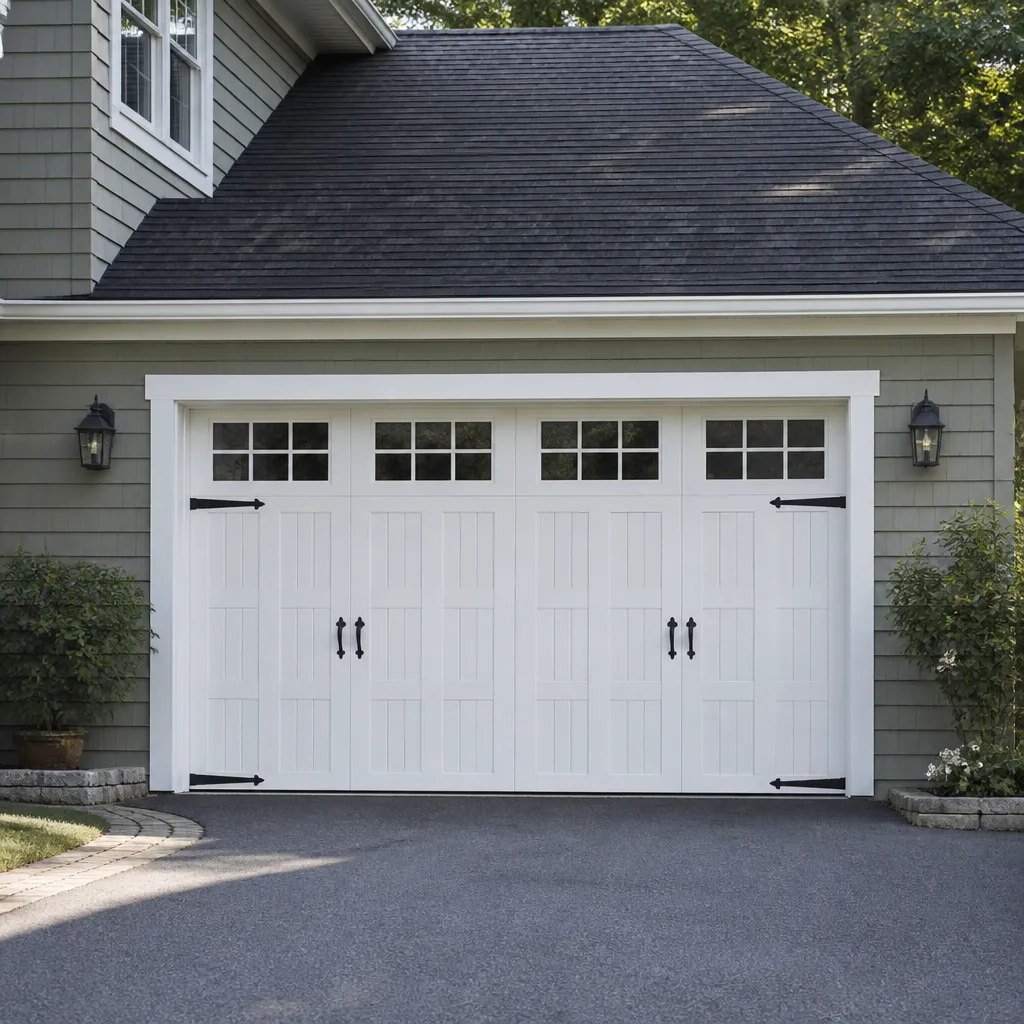
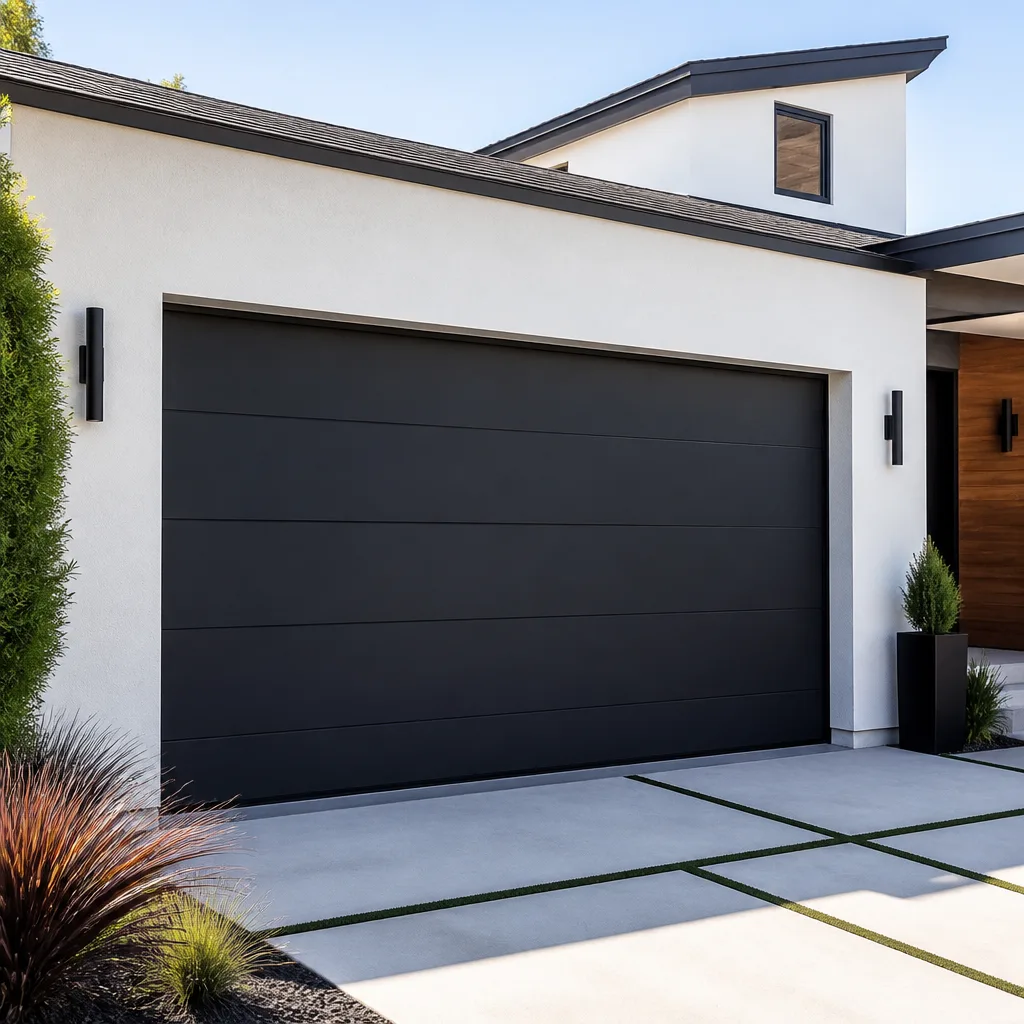
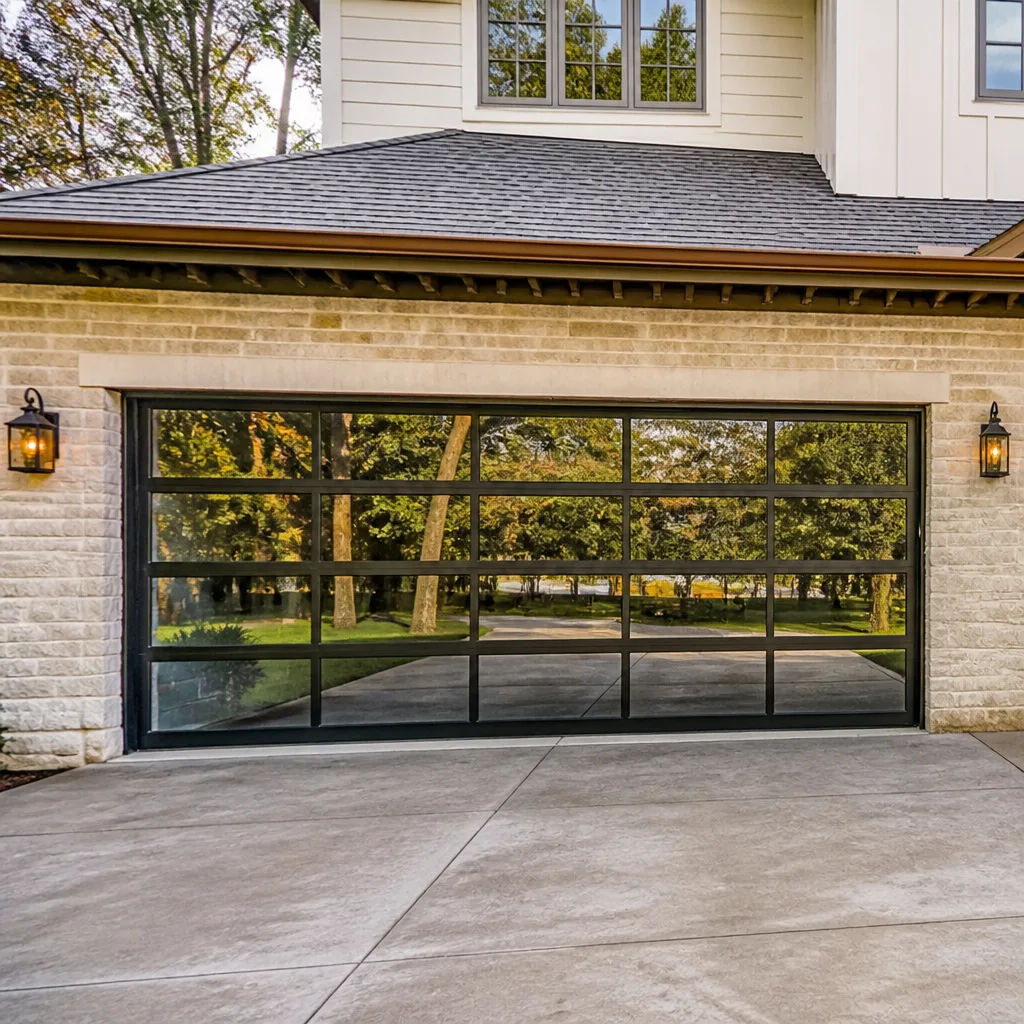
 Before
 After
After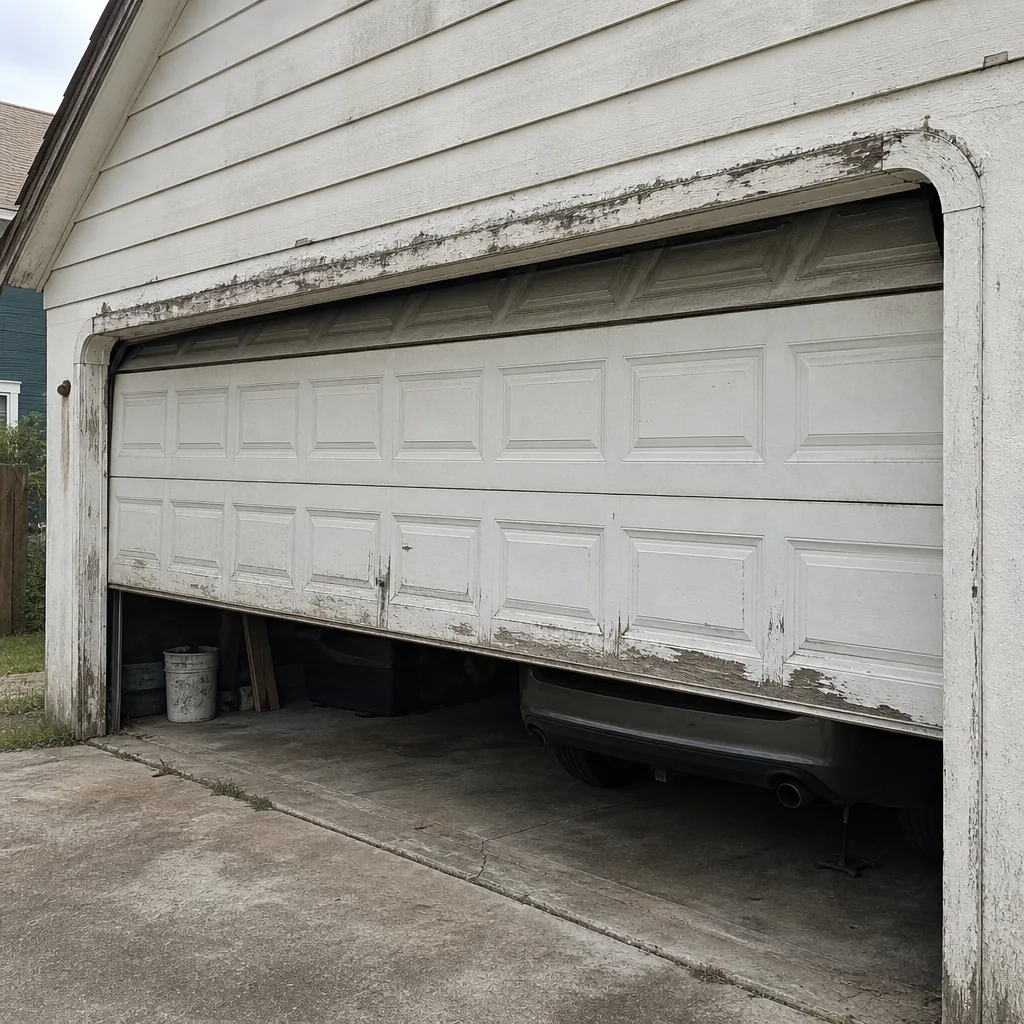 Before
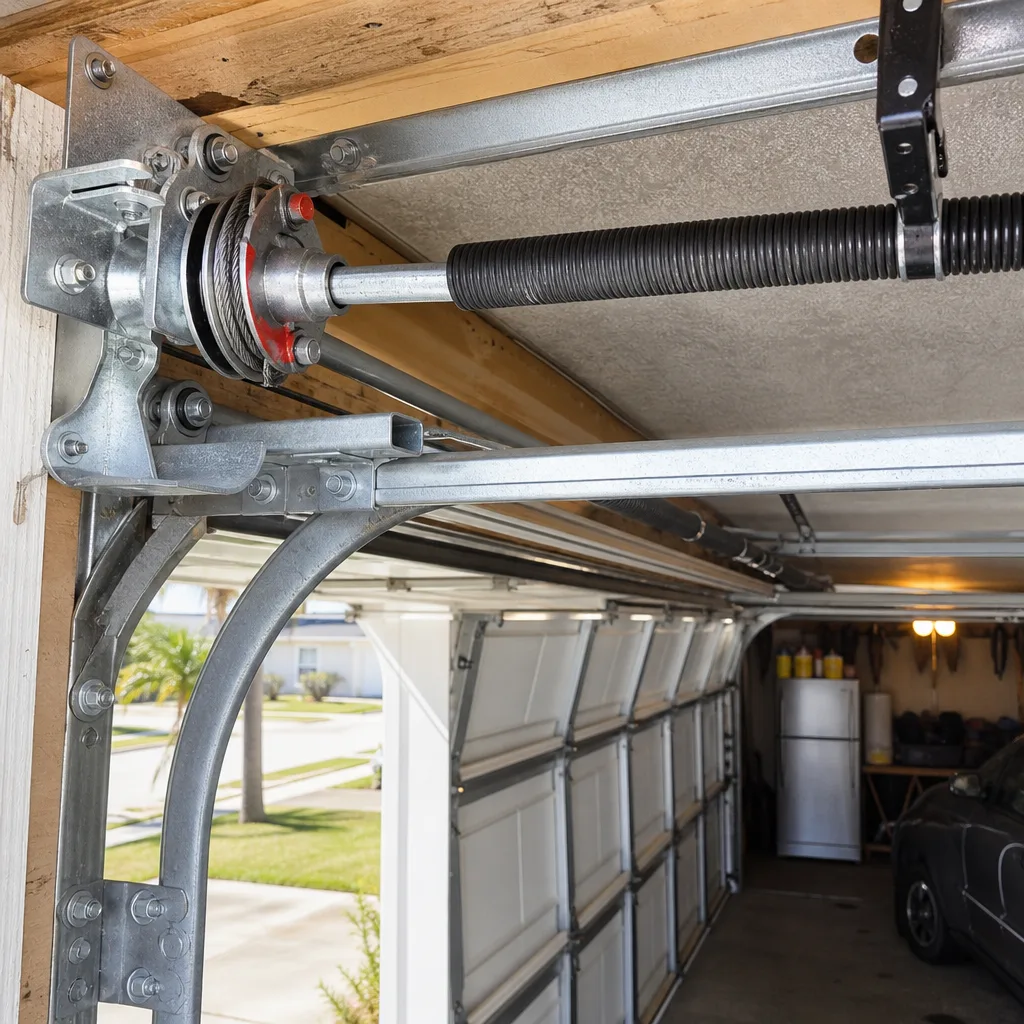 After
After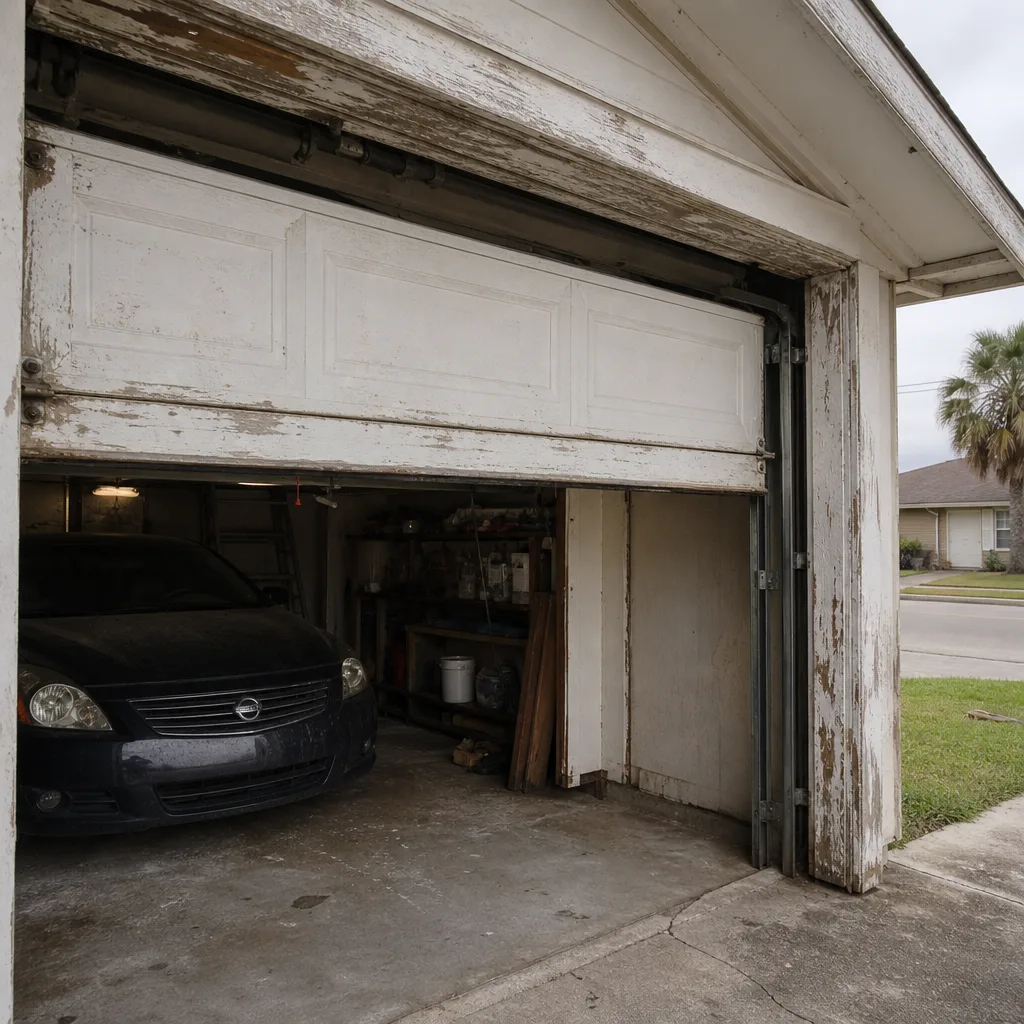 Before
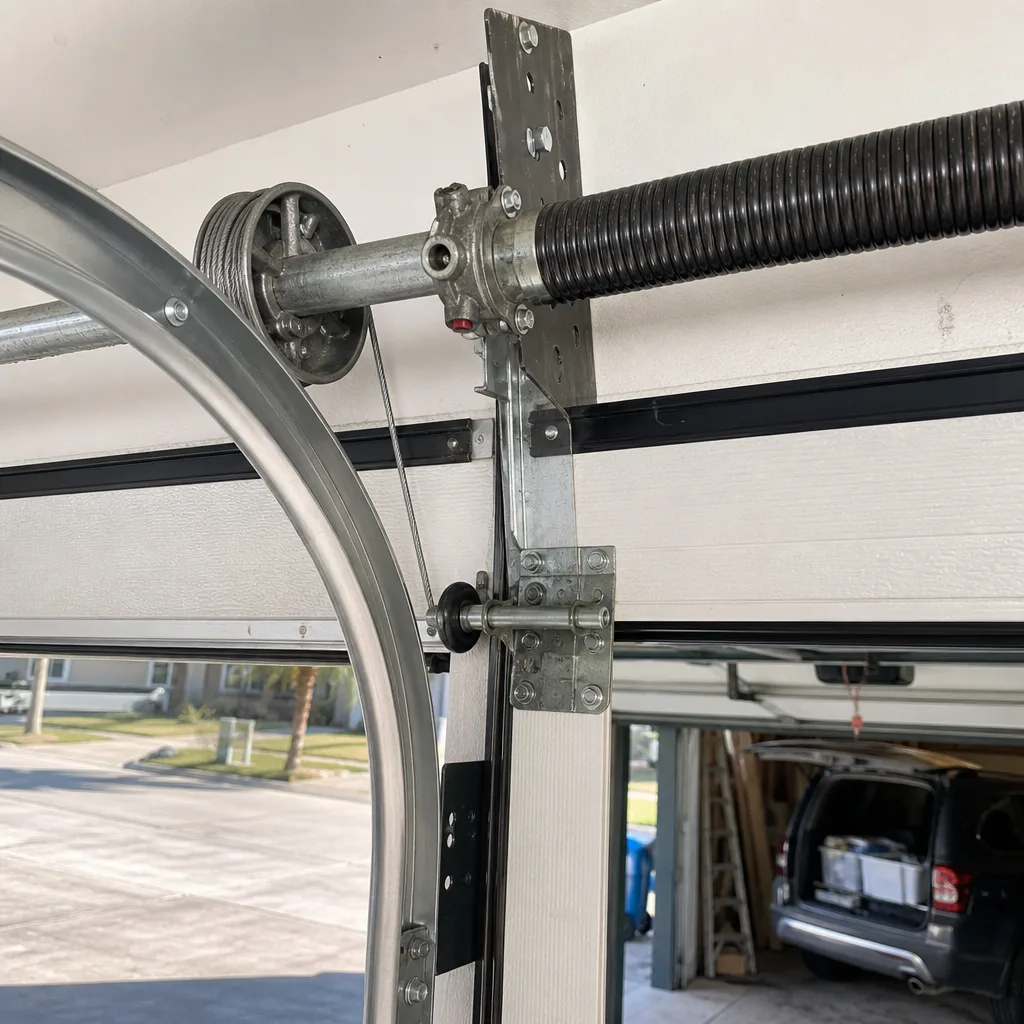 After
AfterGarage Door Warning Signs: A Galveston Homeowner’s Reference Guide
A garage door that squeaks in Dallas probably needs a squirt of lubricant. The same squeak on a Galveston door that hasn’t been serviced in two years is more likely a corroded torsion spring within one season of breaking. And a broken torsion spring can trap a car or injure whoever tries to open the door manually. In The Complete Guide to Garage Door in Galveston, you’ll learn which warning signs are cosmetic nuisances in dry climates but genuine failure precursors on the Texas Gulf Coast, where salt, heat, and humidity accelerate the sequence from warning to breakdown. We’ve spent 42 years watching Galveston doors deteriorate faster than inland counterparts, and the patterns are predictable once you know what to look for.
Quick Answer
The five warning signs every Galveston homeowner should monitor are: a door that opens slower than it used to, visible rust bleed at panel seams, uneven gaps between the door and frame, squeaking or grinding that returns within weeks of lubrication, and an auto-reverse test that responds sluggishly or not at all. These symptoms progress faster here than inland because salt air penetrates springs from the inside out, sandy substrate slowly shifts track alignment, and humidity degrades opener electronics. Catching them early prevents the sudden failures that leave you stranded or injured, which is why seasonal garage door care for Galveston matters year-round.
Table of Contents
- Slow Operation: The Opener Motor’s Silent Cry for Help
- Rust Bleed at Panel Seams: Surface Stain or Core Failure?
- Uneven Gaps: Galveston’s Sandy Substrate and Track Drift
- Spring Corrosion: The Coastal Failure Mode You Cannot See
- The Monthly Auto-Reverse Test: What Slow Response Reveals
- Noises and Vibrations: When to Worry, When to Wait
- Common Mistakes to Avoid
- When to Call a Professional
- Frequently Asked Questions
Slow Operation: The Opener Motor’s Silent Cry for Help
A door that “works fine” but takes longer to open than it used to is burning out the opener motor. This registers as inconvenience until the opener fails entirely, usually at the worst possible moment.
Most homeowners in Galveston don’t notice the gradual slowdown. A door that opened in 12 seconds five years ago now takes 18 or 20. The motor runs longer, heats more, and draws excess amperage. In our experience, by the time a homeowner mentions the delay, the opener’s internal thermal cutout has already triggered once or twice, leaving the door stuck until the motor cools.
High humidity accelerates this failure mode. Opener circuit boards in Galveston garages corrode at contact points, causing erratic voltage delivery to the motor. The motor compensates by working harder. We see this most often in homes near the Seawall, where salt air penetrates even well-sealed garage spaces, and in older homes in the East End Historic District where garage ventilation is poor.
Here’s how to check:
- Time your door from fully closed to fully open. A healthy residential opener completes the cycle in 12-15 seconds.
- Listen for a change in motor pitch. A motor straining against excess load hums lower and louder.
- Feel the opener housing after a cycle. Warm is normal. Hot enough that you must pull your hand away indicates overload.
The cause is rarely the opener alone. Usually it’s a door out of balance, worn rollers creating drag, or a spring system losing tension. The opener was sized for a specific load. When that load increases, the motor pays the price. Replacing a burned-out LiftMaster or Chamberlain unit in Galveston runs $450-$650 installed, but the real cost is the repeat failure if you don’t fix what overloaded the first one.
We carry replacement openers from LiftMaster, Chamberlain, and Genie on our trucks, and we balance every door before installing a new unit. A door that runs right doesn’t strain the motor. That’s the square deal.
Rust Bleed at Panel Seams: Surface Stain or Core Failure?
Rust-colored streaks running from panel seams look like cosmetic oxidation. On a Galveston door, they often signal that moisture has penetrated the steel shell and reached the foam core, compromising the panel’s structural integrity.
Modern steel garage doors sandwich polyurethane or polystyrene foam between two thin steel skins. The foam provides insulation and rigidity. When salt air and humidity find a seam gap, water wicks inward. The steel corrodes from the inside, and the foam deteriorates. The panel weakens. Eventually it dents more easily, bows under its own weight, or separates at the seam entirely.
We’ve replaced panels in Jamaica Beach where the interior foam had turned to crumbly sand, the steel skin delaminated like peeling paint. The homeowner thought they were looking at a surface rust problem until the panel buckled during a routine opening cycle.
Distinguishing surface rust from core failure:
- Surface rust sits on top of the steel, feels rough but solid, and doesn’t spread beyond a localized area. It responds to sanding and touch-up paint.
- Rust bleed runs in streaks from seams or fastener holes, indicating water migration behind the surface. The metal may feel thin or flex unusually when pressed.
- Core failure shows as panel bowing, a hollow sound when tapped, or visible separation between the steel skin and the foam edge at the seam.
Clopay and Amarr both manufacture coastal-grade doors with enhanced seam sealing and galvanized steel, but even these require intact bottom seals and proper drainage. A door sitting in pooled water after Galveston’s heavy spring rains will fail regardless of grade. Check your bottom seal annually. If it’s cracked or compressed flat, replace it before water starts wicking upward.
Panel replacement is viable if the door model is still manufactured and the color hasn’t faded unevenly. We stock panels for common Clopay and Wayne Dalton models, and we can match most colors within a few years of manufacture. For older doors where matching fails, a full replacement becomes the practical choice. Garage Door Installation in Galveston covers what to specify for coastal durability.
Uneven Gaps: Galveston’s Sandy Substrate and Track Drift
A door that still opens and closes but shows uneven gaps at the sides is warning you about track misalignment. In Galveston, this symptom traces directly to our sandy substrate and the slow settling it causes.
Unlike the clay soils of Houston or the rock beds of the Hill Country, Galveston’s foundation sits on loose sand deposited by centuries of Gulf currents. This sand compacts unevenly, shifts during wet seasons, and transmits vibration differently. A garage door frame that was plumb when installed gradually tilts. The vertical tracks, which must be parallel within a quarter-inch to prevent binding, drift apart or out of square.
The warning appears before the door jams. You might notice:
- A gap of three-quarters inch on the left side and a tight rub on the right
- Light visible at one bottom corner but not the other when the door is closed
- The door touching the weatherstrip on one side while the opposite side shows daylight
Homeowners in Pirates Cove and Pointe San Luis call us about this more often than those in older, more established neighborhoods like the East End, where foundations have had decades to settle into final position. Newer construction on filled land, particularly west of 61st Street, shows faster drift.
Track realignment is straightforward when caught early. We loosen the mounting brackets, re-plumb the verticals with a long level, check the horizontal track for proper back-hang angle, and retorque everything. The job takes 45 minutes to an hour. Left unaddressed, the rollers wear asymmetrically, the hinges stress, and the door panel itself can twist. We’ve seen doors in Laffite’s Cove where the top section had warped enough that the windows leaked every thunderstorm.
The key is measuring gap symmetry monthly. Stand inside your garage with the door closed. Look across the bottom. If one side sits lower or one gap looks wider, call before the door starts binding. Garage Door Repair in Galveston includes track realignment as a standard service, and we quote the flat price before any wrench turns.
Spring Corrosion: The Coastal Failure Mode You Cannot See
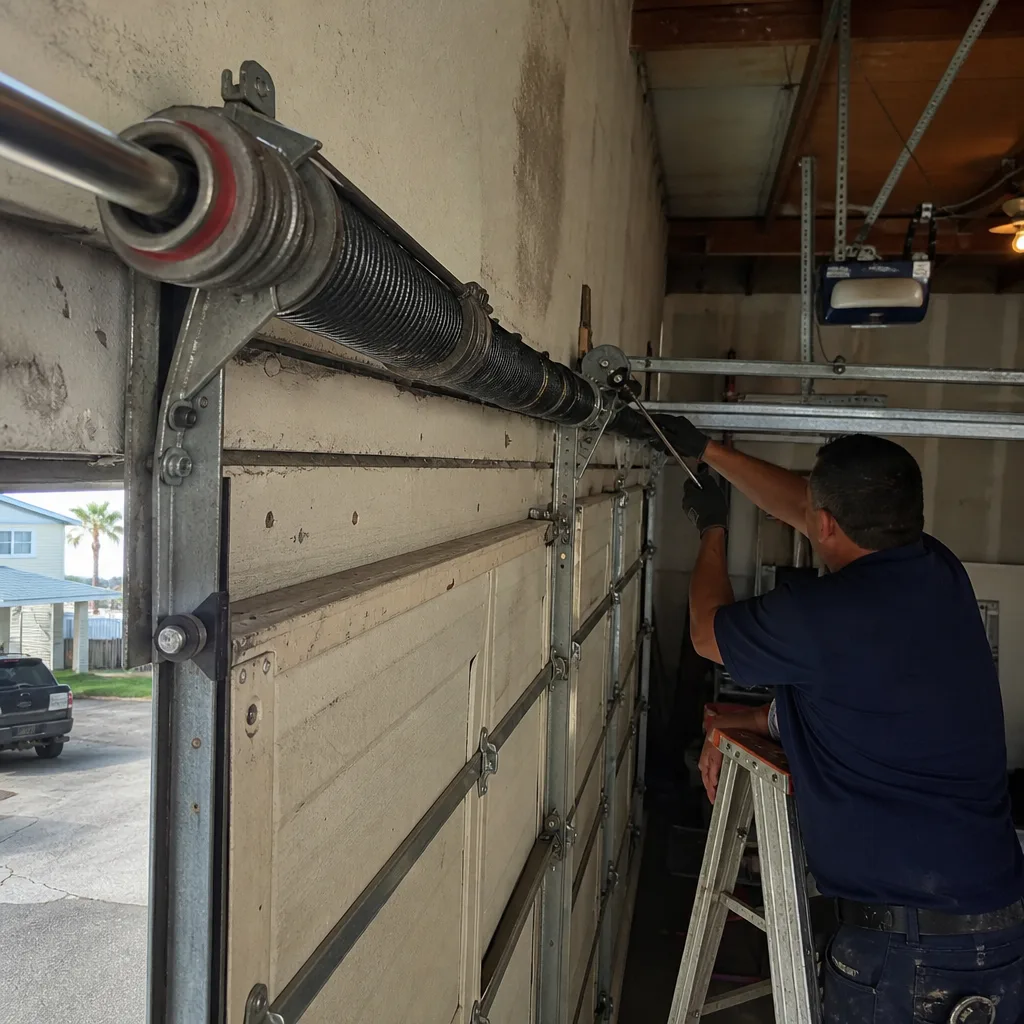
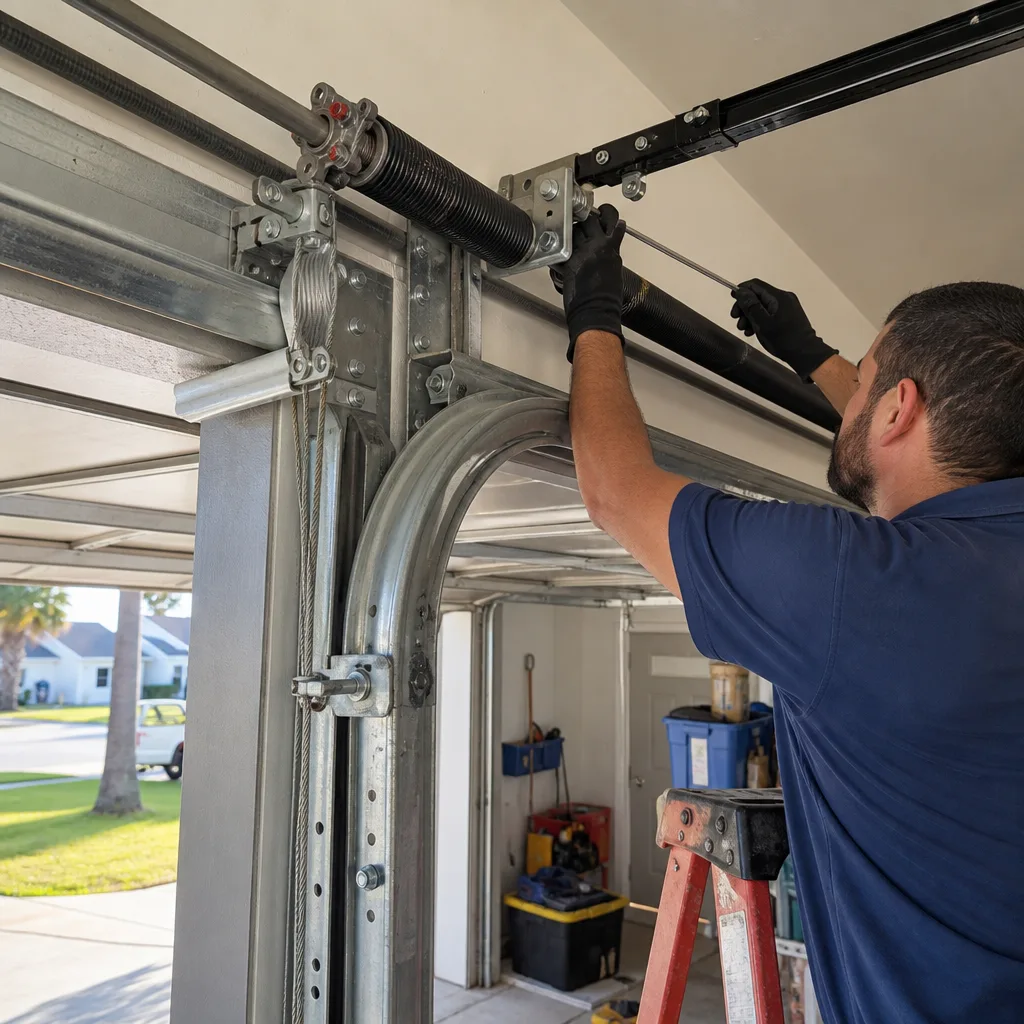
Torsion springs carry the full weight of your garage door. When they break, the door becomes dead weight, usually 150 to 250 pounds of it. Attempting to lift manually risks back injury, crushed fingers, or a door that crashes down unexpectedly. This is the genuinely dangerous component we flag without exception.
Here’s what most warning sign guides miss: on the Gulf Coast, springs fail from the inside out.
Galveston’s salt air penetrates the microscopic pores in the spring’s steel. Corrosion begins internally, at the center of the wire cross-section, where you cannot see it. The spring can look nearly normal on the outside while its effective diameter has reduced by a third. When it breaks, it often does so without the dramatic rust you’d expect. The surface shows minor oxidation. The core has hollowed.
In Dallas or Austin, a spring with light surface rust might last another three seasons. In Galveston, that same appearance can mean six months remaining, or less if the garage faces prevailing southeast winds.
How to distinguish normal aging from dangerous corrosion:
| Normal Aging | Coastal Corrosion (Dangerous) |
|---|---|
| Surface rust that wipes off, revealing intact steel beneath | Rust that pits the surface or leaves orange dust that returns within days |
| Gradual, even spacing between coils when door is open | Visible gaps where coils have stretched unevenly, indicating internal weakness |
| Spring sits quiet during operation | Spring makes creaking or pinging sounds as individual coils flex against corrosion points |
| Door balances at half-open position | Door drifts down from half-open, indicating lost tension from wire thinning |
We replace springs in pairs, even when only one has broken. Matched springs ensure even lift and prevent the surviving spring from overworking. Our trucks carry torsion springs for every common door size and weight, including high-cycle springs rated for coastal environments. Most spring replacements in Galveston finish in a single visit.
Never attempt to wind or unwind a torsion spring yourself. The stored energy can release catastrophically. This is trained professional work, period.
The Monthly Auto-Reverse Test: What Slow Response Reveals
Every garage door opener manufactured since 1993 includes an auto-reverse mechanism. Federal law requires it. The test takes thirty seconds. Most Galveston homeowners have never performed it.
Here’s the procedure:
- With the door fully open, place a 2×4 board flat on the floor, centered under the door path.
- Close the door using the remote or wall button.
- When the door contacts the board, it must reverse within two seconds and return to fully open.
- Remove the board and test the photoelectric sensors by waving an object through the beam while the door closes. The door must reverse immediately.
A door that pauses on the board, reverses slowly, or fails to reverse at all is a hazard to children, pets, and property. But in Galveston, there’s a secondary reading: slow response often indicates moisture degradation in the opener’s logic board or force sensors.
Humidity causes corrosion at electrical contacts. The opener “thinks” it needs more force to close the door, so it increases motor torque. When it hits the obstruction, the excess inertia carries through before the reverse command executes. We’ve tested openers in homes near Offatts Bayou where the reverse delay had stretched to four seconds, the opener straining against a door that was actually well-balanced.
Photoelectric sensors fail differently here. Condensation fogs the lenses. Spider webs, which grow dense in our humid garages, obscure the beam. The sensors misalign more easily when mounting brackets corrode. A yellow or blinking LED on one sensor usually indicates misalignment or blockage.
Clean lenses monthly with a dry cloth. Check bracket tightness seasonally. If the test fails after cleaning, the opener needs service. We repair and replace openers from all major brands, and we test the auto-reverse on every service call. Garage Door Opener in Galveston details our diagnostic and replacement options.
Noises and Vibrations: When to Worry, When to Wait
Not every sound demands immediate action. The trick is knowing which noises progress and which stabilize.
Squeaking that lubrication fixes permanently: Dry rollers, hinges, or bearings. Use a silicone-based garage door lubricant, not WD-40, which attracts dust. Apply to roller bearings, hinge pins, and the torsion spring coils. If the squeak stays gone for six months, you’ve solved it.
Squeaking that returns within two to four weeks: This pattern indicates metal-on-metal wear, not simple dryness. Worn rollers develop flat spots. Hinge pins elongate their holes. The lubricant temporarily fills the gap, then squeezes out under load. In Galveston, accelerated corrosion makes this progression faster. We’ve replaced roller sets in Midtown Galveston where the steel rollers had worn to ovals in eighteen months, half the normal lifespan.
Grinding or rumbling: Usually a failing opener gear set or a door with a broken spring forcing the opener to drag dead weight. Both require prompt attention. The gear set will strip entirely, often at 10 PM on a holiday. The overloaded opener motor will burn out.
Clunking at start or stop: Loose hardware. Check the opener mounting bracket to the header, the spring anchor bracket, and the roller bracket bolts. Vibration loosens these over years. In Galveston, thermal expansion from our 40-degree winter lows to 95-degree summer highs accelerates loosening. Tighten with a socket wrench, but never touch the spring hardware.
Vibration transmitted to the house: Often the opener is underpowered for the door, or the door has become unbalanced. An unbalanced door shakes at the turn-around points. The vibration travels through the header into wall framing. We’ve had homeowners in the West End describe it as “the whole bedroom rattles.” Rebalancing the door usually eliminates it entirely.
Nylon rollers run quieter than steel and don’t corrode, but they wear faster under heavy doors. For coastal Galveston, we often recommend sealed-bearing steel rollers with a corrosion-resistant finish, or solid nylon for homeowners prioritizing quiet operation. We stock both and can swap them in a single visit.
Common Mistakes to Avoid
- Ignoring seasonal slowdown. A door that opens fine in March but labors in August isn’t “just the heat.” Thermal expansion increases friction in worn components. The warning is real, and it will worsen.
- Using the wrong lubricant. WD-40 and similar penetrating oils evaporate and leave a gummy residue that collects salt air particulates. Use silicone or lithium-based products formulated for garage doors.
- Assuming surface rust tells the whole story. In Galveston’s salt air, springs and cables can fail with minimal external warning. If your door is over seven years old and hasn’t had a professional inspection, schedule one.
- Testing the auto-reverse with your hand or foot. The test exists precisely because human reflexes are too slow. Use a solid object like a 2×4, and replace the board if it becomes compressed or splintered.
- Waiting for the door to stop entirely. Complete failure costs more than preventive repair. A spring replacement is routine. A spring that breaks and tears the cable, dents the panel, and burns out the opener is not.
- Hiring based on the lowest bid without verifying insurance and local presence. Galveston has seen its share of storm-chasing contractors after hurricanes. A local shop with 42 years of history answers the phone when you need warranty service.
- Neglecting the bottom seal. That rubber strip is your door’s primary defense against water intrusion, insects, and debris. It costs $30-$60 to replace and prevents thousands in panel or opener damage.
When to Call a Professional
Call when the auto-reverse test fails, when a spring shows any sign of corrosion or uneven spacing, when gaps between door and frame exceed a half-inch, or when the door’s opening time has increased by more than three seconds. Call if rust bleed appears at panel seams, if the opener housing runs hot, or if any noise persists after proper lubrication.
Do not attempt to adjust, repair, or replace torsion springs, cables, or opener high-voltage components yourself. These can cause serious injury or death.
Mainspring Garage Door Co. offers free estimates in Galveston, and you can find more guides & resources on our blog. A technician will inspect your door, test every system, and quote the flat price before any work begins. No surprises on the bill. Call (409) 498-6056. Phones are answered by a live person, 24/7, including nights, weekends, and holidays.
Frequently Asked Questions
Spring replacement in Galveston typically runs $180-$340 for a standard residential torsion system, including both springs, labor, and a safety inspection. High-cycle springs or doors with unusual configurations may run higher. We quote the exact price before starting work, and every spring job carries our 90-Day Done Right Promise. Not sure what to ask? Read How to Hire a Garage Door Contractor in Galveston: A Step-by-Step Guide first. Call (409) 498-6056 for a free estimate.
Every 12 months minimum, and every 6 months if your garage faces the Gulf or lacks climate control. Salt air, humidity, and temperature swings accelerate wear beyond what annual service addresses in drier climates. Our $89 Seasonal Tune-Up includes balance testing, safety system verification, lubrication, and hardware inspection.
Homeowners can safely lubricate rollers, hinges, and the opener chain or screw. Do not lubricate the track itself, which causes roller slippage, and never touch the torsion spring or its mounting hardware. If lubrication doesn’t eliminate noise for at least three months, the underlying wear requires professional attention.
Thermal expansion increases friction in worn rollers, hinges, and bearings. Humidity swells wooden doors and degrades opener electronics. In Galveston, summer heat also softens asphalt driveways, which can shift slightly and alter door alignment. The seasonal pattern is diagnostic: it points to components at the edge of failure, not normal variation.
Surface rust on the exterior face is cosmetic if it hasn’t pitted the steel. Rust bleed at seams indicates moisture penetration to the foam core, which compromises structural integrity. In Galveston’s salt air, seam rust progresses faster than inland. Have a technician assess whether panel replacement or full door replacement is the practical choice.
Disconnect the opener by pulling the red release handle and operate the door manually. A door that moves smoothly and stays at half-open is balanced; the opener is likely at fault. A door that feels heavy, drifts down, or binds has a spring, track, or roller problem overworking the opener. We diagnose this on every service call and fix the root cause, not just the symptom.
The Bottom Line
Galveston’s coastal environment turns minor garage door symptoms into major failures faster than homeowners expect. The warning signs are specific and observable: slower operation, rust bleed at seams, uneven gaps, persistent noise after lubrication, and auto-reverse delay. Catching these early prevents the sudden breakdowns that trap vehicles, compromise security, and risk injury. Monthly visual checks and the auto-reverse test take five minutes. Professional inspection annually, or semi-annually for Gulf-facing properties, catches what homeowners cannot see, particularly the internal spring corrosion that defines coastal failure. The cost of prevention is modest. The cost of emergency replacement, with a car stuck inside during a Gulf storm, is not.
Written by Carl Dutton, Owner at Mainspring Garage Door Co., serving Galveston since 2016.